

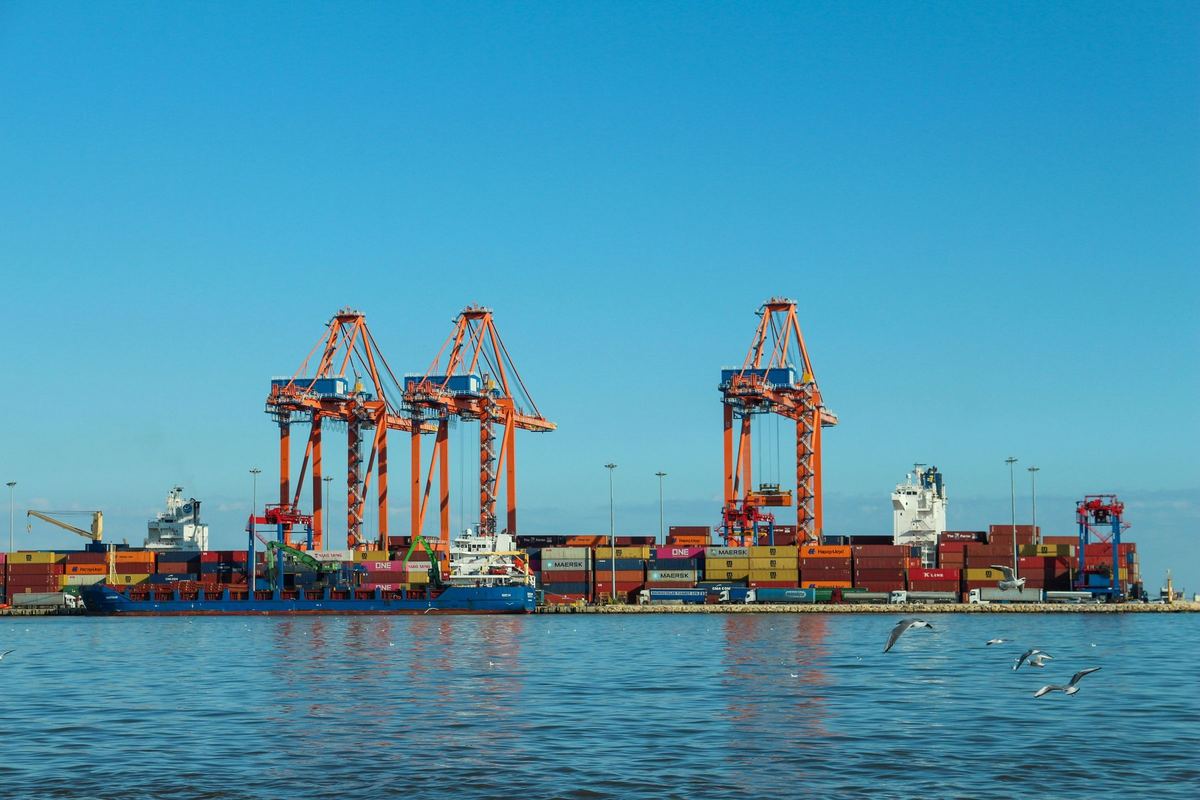
Plan import, export, off-dock facility, VGM and hinterland container haulage in İskenderun with NarinPort.
Summary
Container haulage in İskenderun comprises timely import removal, meeting export loading windows and correctly planning empty returns. NarinPort operates as an independent structure coordinating K1-authorised contracted carriers, terminals, documents, weighing and off-dock facilities in one plan, rather than a haulier operating its own fleet. This model helps reduce storage, demurrage, detention, document and terminal-congestion risks. For movements from the gulf into Hatay, Adana, Osmaniye, Gaziantep, Kilis and Kahramanmaraş, the aim is safe transport using the correct equipment, documents and timing.
When an import container is discharged at a terminal on the Gulf of İskenderun, or your export cargo is ready to leave a hinterland factory, the most critical point is often the right transport plan at the right time, rather than the container itself. Gate exit, arrival at the delivery address, any off-dock transfer and timely empty return require documents, vehicles, terminals and timing to be managed together.
NarinPort works through an independent coordination structure on the cargo owner's side. Without being tied to a quay, it plans container transport through its off-dock facility advantage and pool of contracted K1-authorised carriers. The aim is prompt import removal, timely export delivery for the vessel-loading window and traceability through one file.
The service described here is not container manufacture, container sales or terminal operation. Our İskenderun haulage service covers road transport of laden containers from the terminal gate to an off-dock facility, a warehouse or a hinterland delivery address. For exports, the aim is factory collection, weighing and document planning, correctly timed terminal entry and dispatch to meet loading cut-off.
In container transport, a small missing document, an incorrect vehicle plan or a missed terminal window can become storage, demurrage and detention costs. NarinPort therefore manages an operational plan addressing documents, timing, terminal conditions, carrier selection and off-dock storage together, rather than treating the work as vehicle organisation alone.
To prepare a quotation, we need container type, cargo type, approximate tonnage, origin terminal, delivery address, import/export direction and special equipment requirements.
What Does Our Container Haulage Service Cover?
The scope of İskenderun container haulage consists principally of two main movements:
- Road transport from the terminal gate to an off-dock facility or delivery address.
- Coordination of short port-related shuttle movements between terminal, stacking yard, quay and connected operational points.
These movements require different plans for imports and exports. For imports, prompt port removal and reducing unnecessary yard waiting are priorities. For exports, the loading window, VGM notification, terminal cut-off and vehicle plan must proceed in harmony within one schedule.
NarinPort does not operate its own tractor and trailer fleet. Container haulage is coordinated through contracted K1-authorised carriers, allowing vehicle and driver planning to meet operational requirements without dependence on one carrier's capacity.
This boundary must be understood correctly. NarinPort is not a customs broker; declaration registration and brokerage services are performed by authorised customs brokers. NarinPort is also not a terminal or quay operator; cranes, piers, quays and terminal yards are the coastal facility operator's responsibility. Weighing is performed by an authorised operator. Our role is to bring these actors together in one operational file and coordinate container haulage.
How Does Container Transport Work in İskenderun?
Container transport begins when cargo information and the vessel schedule become clear, rather than when the container reaches the terminal gate. Import and export processes resemble each other but have different critical thresholds. Imports prioritise prompt removal and establishing delivery flow. Exports require loading, weighing and documentation at the correct time to meet the vessel-loading window.
| Process Area | Import Container Haulage | Export Container Haulage | Critical Checkpoint | NarinPort's Coordination Role |
|---|---|---|---|---|
| Operational Start | Begins with vessel discharge, terminal receipt and readiness for collection. | Begins with packing at the factory, warehouse or loading point and planning port dispatch. | Vessel / Cargo Schedule | Aligns ETA, terminal status, loading time and delivery plan in one operational schedule. |
| Primary Objective | Remove the container without unnecessary port waiting and direct it to the delivery address or off-dock facility. | Obtain terminal acceptance within cut-off and the vessel-loading window. | Timing | Plans gate-out or gate-in in advance according to vehicles, documents, terminal and delivery. |
| Document Flow | Delivery order, bill of lading copy, EIR, electronic dispatch note, vehicle authorisation, plate and driver documents are checked. | VGM, electronic dispatch note, loading documents, seal details, vehicle information and terminal conditions are checked. | Document Consistency | Identifies missing or inconsistent documents before operations to reduce terminal waiting. |
| Terminal Risk | Congestion, late release, inconsistent EIR or late vehicle notice can delay collection. | Late dispatch, incorrect VGM or missed cut-off can put loading at risk. | Gate Operations | Tracks gate conditions, carrier planning and documents in one operational file. |
| Cost Risk | Port storage, demurrage, gate waiting, detention and late empty-return costs may arise. | Missed cut-off, additional waiting, redispatch, VGM/weighing delays and terminal overtime may arise. | Additional Cost | Makes cost items and risky thresholds visible before transport starts. |
| Operational End | Completed by directing the empty container to the line's designated return point after laden delivery. | Proceeds through terminal acceptance, VGM/document completion and inclusion in the vessel schedule. | Tracking Chain | Tracks gate records, EIR, weighing, delivery and empty return as complementary parts of the operation. |
Collecting an Import Container
Import collection is planned using the vessel's ETA and discharge programme. First, customs status, the line's cargo-release status and delivery-order procedures are checked. Before the container leaves the terminal, tractors and chassis are planned around terminal-gate hours and current congestion.
Gate exit is one of the most sensitive import-container stages. Plate registration, ISPS entry cards, bill of lading copy, delivery order, EIR, electronic dispatch note, vehicle authorisation and driver documents are checked together. A missing or inconsistent document can hold the vehicle at the terminal gate and disrupt the timetable.
After terminal exit, two different flows are possible.
- In the first, the container goes directly to the delivery address.
- In the second, it enters the off-dock facility, where gate-in is recorded, EIR updated, any weighing organised and suitable storage planned according to customs status.
Common bottlenecks include inconsistent delivery-order and EIR information, electronic dispatch notes not issued before terminal arrival, late plate notices or unplanned gate congestion. By checking these before operations begin, NarinPort makes collection more predictable.
Dispatching an Export Container
Export transport proceeds in reverse. The container is packed at the factory, warehouse or loading point; cargo is secured, sealing completed and the container dispatched. The critical threshold is terminal acceptance in line with the vessel schedule and cut-off, rather than merely reaching the terminal.
VGM is central to export containers. The packed container's gross mass must be determined using the correct method and notified to relevant parties before loading. Without complete VGM or acceptable document flow, loading may not be possible.
The photographic VGM document used after 1 July 2025 requires more careful preparation. Container and vehicle information must match, weighing data must be complete and the document must have a terminal-acceptable format. Incomplete flows following old practices can delay terminal entry or loading.
NarinPort builds the export plan backwards from the line's VGM notification deadline and terminal cut-off. Weighing, document preparation, vehicle dispatch, routing and gate entry are aligned accordingly. Missing cut-off can leave the container for the next sailing, create extra waiting costs and disrupt the export schedule.
Empty Container Return
The last step often begins after laden delivery: empty return. After import unloading, the container still belongs to the line and must reach the designated return point within the allowed time.
Late empty return can create detention. It should therefore be considered within the initial plan rather than remembered separately after completion. Where unloading will occur, which depot receives the empty, the return window and vehicle plan should be clear from the start.
NarinPort includes empty return in the import plan. After unloading, container condition is checked, EIR updated and the vehicle directed to the line's designated return point. Laden delivery and empty return are thus managed as one operational chain rather than separate steps.
Transport by Container Type: 20-Foot, 40-Foot and Special Equipment
Correct equipment is not selected by container length alone. Weight, volume, centre of gravity, securing, temperature sensitivity and route conditions must be considered together. Every type, whether 20-foot, 40-foot, 40-foot HC, reefer, open-top or flat-rack, requires a different operational plan.
20-Foot Containers
Twenty-foot containers are generally preferred where weight is decisive. Steel coils, rolled sheet, marble blocks, ore or dense industrial raw materials may approach legal weight limits before the container's volume is full.
Planning therefore considers road-legal tonnage, axle distribution and load securing as well as technical container capacity. Incorrect loading or uneven weight distribution can create road-safety and terminal-acceptance risks for heavy cargo.
40-Foot and 40-Foot High Cube
Forty-foot containers serve cargo where volume matters more than weight. Light, bulky products may fill them without reaching tonnage limits. Planning considers efficient volume use and manoeuvring at the delivery point.
High-cube height needs separate assessment. HC containers are taller than standard 40-foot containers, requiring extra checks for bridges, overpasses, terminal gates and route choice. Low chassis, alternative routes or advance delivery-access checks may be required.
Steel and Special Equipment
İskenderun and its surrounding hinterland are strong operational regions for iron, steel and heavy industry, which is reflected in container transport. For coils, sheet, profiles, machinery or dense raw materials, the main risk often lies inside the container in its securing arrangement.
For high-slip-risk cargo such as coils, cradle dunnage, suitable lashing and the correct loading angle are critical. Cargo moving inside a container can damage products, upset vehicle balance and cause serious road-safety risks. The transport plan must therefore follow the cargo's physical characteristics.
Equipment outside standard dry containers makes the process more sensitive. For reefers, temperature monitoring and power continuity matter. Open-top and flat-rack loads require separate dimensional, lashing, permit and route assessment. Dangerous goods (IMO/ADR) are not transported.
NarinPort coordinates determination of the equipment and transport flow needed by cargo type. This answers not only which container is needed, but also with which documents, vehicle, route and timing the cargo can move safely.
İskenderun Hinterland and Local Conditions
Distance and route directly influence cost and timing. Short routes connect terminals with off-dock facilities; medium-distance movements serve hinterland factories, warehouses and production sites.
Hatay's inland districts and surrounding industrial areas such as Adana, Osmaniye, Gaziantep, Kilis and Kahramanmaraş are within the gulf's natural hinterland. Cargo type, dimensions, tonnage, delivery access and route limits need advance analysis.
The Toprakkale–İskenderun corridor and connecting motorways form the main road backbone. Axle limits, high-container clearances and oversized-load permits become part of planning.
Multiple terminals have different gate pressures and vessel programmes. NarinPort's independent coordination model, unconnected to a particular terminal, provides the flexibility to rebuild the operation according to the terminal where cargo emerges.
The region's weather conditions must also be considered in container transport. Strong winds, southwesterlies or conditions affecting operational safety can slow cranes, discharge schedules and terminal-gate movements. During such periods, collection must be rescheduled according to the terminal's current status and vehicle waiting reduced as far as possible.
The Gulf of İskenderun also has a strategic position for transit cargo because of its proximity to Syria and Iraq. Border-crossing conditions, transit document preparation and delivery schedules may require more sensitive planning than domestic deliveries. Transit-container movements therefore require terminal, customs broker, carrier and delivery planning to work together.
The Off-Dock Advantage and Cost Control
| Cost Item | When Can It Arise? | Operational Location | Main Recipient | Planning Requirement |
|---|---|---|---|---|
| Port Storage | Cargo waits in the port or terminal yard. | Port / Terminal Yard | Usually the port or terminal operator. | Documents, vehicles and delivery should be planned to limit unnecessary yard waiting. |
| Demurrage | The container remains inside the terminal beyond free time. | Inside Terminal | Usually the line or sea carrier. | Complete delivery order, customs status, vehicle planning and gate exit without delay. |
| Detention | The container is not returned empty within the allowed period after leaving the terminal. | Outside Terminal | Usually the line or equipment owner. | Include unloading address, empty-return point, return window and return vehicle in the initial plan. |
| Gate Waiting / Overtime | The vehicle waits longer than planned at the terminal, weighbridge, warehouse or delivery point. | Gate, weighbridge, warehouse, factory or delivery point. | Carrier, terminal, weighbridge or operations provider. | Check appointments, plate notice, document readiness and site acceptance in advance. |
| Special Equipment / Additional Operations | Reefer, open-top, flat-rack, out-of-gauge cargo, special chassis or extra safety requirements arise. | Loading point, route, terminal or off-dock facility. | Carrier, equipment provider, terminal or operational partner. | Share cargo type, tonnage, dimensions, temperature sensitivity and route restrictions clearly at quotation stage. |
These costs have different recipients, tariffs and clocks. Early terminal removal helps control them. Our facility offers non-bonded storage; goods under customs control are planned with our contracted customs broker.
The off-dock model also supports continuity when terminals are busy, weather changes, vessel arrivals bunch or demand rises. Contracted-carrier planning makes the operation more scalable than a fixed, limited fleet.
Quotations consider gate waiting, weighing, delivery orders, night or holiday work and special equipment alongside transport. We clarify these items before operations to reduce unexpected costs.
What Does NarinPort Do?
We combine carrier and driver planning, terminal timing, weighing coordination, customs-broker document flow and delivery planning in one operation.
We assess container type, cargo, tonnage, ETA, terminal, delivery point, customs status, special equipment and time constraints, then finalise vehicles, document checks, gates and delivery.
Our open yard and covered non-bonded storage help manage cargo off port. Customs-controlled goods are coordinated with our contracted customs broker under the relevant rules; cleared goods follow the storage or delivery plan appropriate to the operation.
Authorised operators perform weighing. Commercial weight, verification, VGM and delivery records remain in the operational file. On completion, customers have a traceable record set covering gates, EIR, weigh tickets, delivery and empty return, useful for quantity differences, damage, insurance or later checks.
- We coordinate haulage with contracted K1-authorised carriers and do not operate our own fleet.
- We do not provide customs brokerage; authorised brokers perform those services.
- We do not operate terminals or directly perform official weighing.
Clear roles establish responsibility from the outset and help make the operation manageable for cargo owners.
| Operational Area | What Does NarinPort Do? | What Does NarinPort Not Do? | Responsible Party / Partner | Benefit for the Cargo Owner |
|---|---|---|---|---|
| Container Haulage Coordination | Coordinates vehicle, documents, terminal gate, delivery point and empty return for imports and exports in one plan. | Does not act as a conventional haulier operating its own tractor and trailer fleet. | Contracted K1-authorised carriers. | Helps create flexible plans without dependence on a single carrier's capacity. |
| Terminal and Quay Process | Tracks gate entry and exit, vessel schedules, cut-off and yard density. | Does not operate a terminal, quay, crane, pier or coastal facility. | The relevant port, terminal or coastal operator. | Allows different terminal processes to be seen within one tracking chain. |
| Customs and Documents | Coordinates document flow between broker, carrier, terminal and cargo owner with the schedule. | Does not register declarations or provide customs brokerage. | Authorised customs broker. | Helps reduce terminal waiting caused by missing or late documents and inconsistent records. |
| Weighbridge and VGM | Plans alignment of weighing needs, timing, VGM document flow and loading schedule. | Does not act as the actual weighing operator or undertake official weighing in its own name. | Authorised weighing operator and relevant document parties. | Helps weighing, VGM and cut-off proceed within one export schedule. |
| Off-Dock Facility | Incorporates off-dock space for controlled waiting, transfer, weighing and preparation for delivery. | Does not determine official port-yard or terminal storage and acceptance decisions. | NarinPort facility infrastructure and operational partners. | Helps manage storage, demurrage, detention and congestion risks in a more controlled way. |
| Operational Records | Tracks gates, EIR, weigh tickets, delivery records and empty returns in the operational file. | Does not assume the official liability of carriers, terminals, weighing operators or brokers. | Relevant operational parties and document providers. | Creates a traceable record chain for damage, quantity differences, insurance and subsequent checks. |
Request a Container Haulage Quote
Share cargo type, approximate tonnage, container type, estimated arrival or loading time, origin terminal, delivery point, customs status and any special equipment requirements. We can prepare the carrier plan, document-check schedule, gate flow and cost items. Single containers and regular hinterland shipments receive the same operational discipline.
Request a Container Haulage Quote
Frequently Asked Questions
How Is Container Haulage Cost Calculated?
Cost depends on container type, cargo, tonnage, terminal, delivery address, route, import or export direction, weighing, special equipment and terminal waiting risk. Distance is considered together with documentation, gate timing, empty return and additional operations.
Does NarinPort Transport Containers Using Its Own Vehicles?
NarinPort does not operate its own tractor and trailer fleet. We coordinate contracted K1-authorised carriers, terminal processes, documents, weighing and off-dock facilities, allowing flexible planning without reliance on one carrier's capacity.
How Is an Import Container Collected?
Vessel arrival, discharge, customs status, delivery orders, EIR, plates, dispatch notes, vehicle authorisation and driver documents are checked together. Missing or inconsistent documents may hold vehicles at the gate, so planning starts when cargo and vessel details become clear.
Why Is VGM Important for Exports?
Accurate gross mass must be established and notified on time for loading. Missing, incorrect or late information may delay terminal acceptance, miss cut-off or disrupt loading.
What Happens If Empty Return Is Late?
The emptied container remains line equipment. Failure to return it within free time can create detention, so empty return belongs in the first transport plan.
How Do 20-Foot and 40-Foot Movements Differ?
Twenty-foot containers tend to serve weight-driven cargo; 40-foot and high-cube containers tend to serve volume-driven loads. Selection also considers tonnage, volume, centre of gravity, securing, delivery access and route restrictions.
What Advantage Does Off-Dock Haulage Provide?
It reduces unnecessary port waiting and provides a more controlled setting for weighing, documents, temporary storage, delivery and empty return. Storage, demurrage, detention and congestion risks become more visible.
What Information Is Needed for a Quote?
Provide cargo type, tonnage, container type, direction, terminal, delivery address, ETA or loading time, customs status, weighing and special equipment needs. These enable accurate carrier, document, gate and cost planning.