

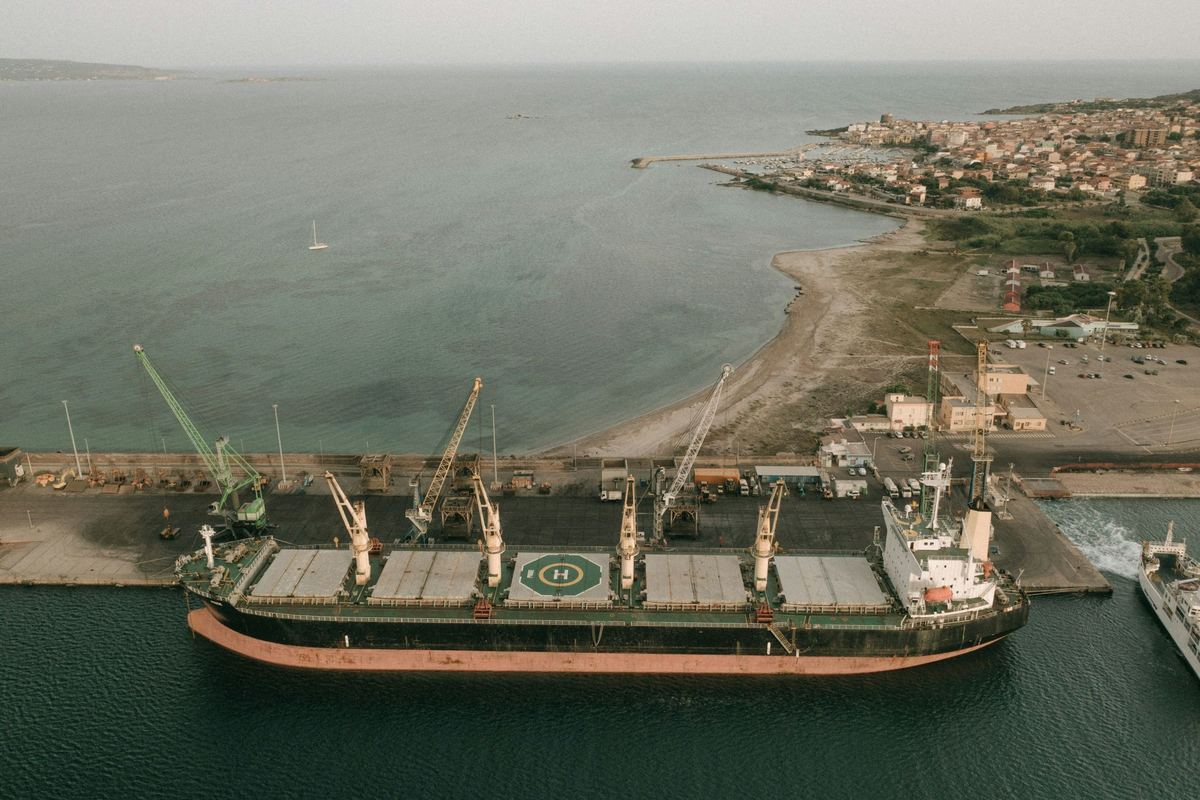
We coordinate weighbridge weighing with a contracted weighbridge operator on the Gulf of İskenderun. From VGM and the verified-gross-mass document to haulage, we provide one point of contact.
Summary
The weighbridge service on the Gulf of İskenderun coordinates commercial container weighing on calibrated off-dock weighbridges and its associated document chain. Actual weighing is performed by a ministry-authorised weighing operator; weigh tickets and Verified Gross Mass documents are issued in that operator's name. NarinPort brings slot booking, haulage, non-bonded warehouse placement and coordination with our contracted customs broker together at one operations desk. Exporters establish SOLAS VGM compliance, and importers establish customs-weight discipline and the audit trail required for insurance recourse, through this chain. Photographs have been mandatory for VGM documents since 1 July 2025.
We coordinate weighbridge weighing, VGM documentation, haulage and storage in one operational file on the Gulf of İskenderun.
Our Weighbridge Services in İskenderun
NarinPort's contracted weighbridge operator undertakes actual weighing on the Gulf of İskenderun; we coordinate the process. Weigh-ticket and VGM-document preparation, container transfer to the facility, non-bonded warehouse placement and document delivery with our contracted customs broker are all followed by the same operations team. We address export SOLAS VGM obligations and import customs-base discipline at one coordination desk without fragmented supplier complexity.
Within the port-services chain, weighbridge service establishes the commercial weight of cargo removed after discharge or packed into containers before dispatch, on a calibrated weighbridge operated by a Ministry of Transport and Infrastructure authorised weighing operator. NarinPort does not perform weighing itself; our contracted operator does. Our contribution is to ensure that weighing proceeds on the same timeline and with the same document integrity as the preceding quay operation and following haulage, storage and customs links.
- For exporters, this means meeting the VGM cut-off.
- For importers, it means cross-checking customs-declared weight to reduce penalties and insurance disputes.
What Are Weighing and the Verified Gross Mass Document?
Weighbridge service is commercial weighing at a weighbridge inside or outside the port with current calibration and periodic inspections and Ministry of Transport and Infrastructure authorisation. It is more than weighing alone: it is a verification link intertwined with customs, maritime legislation and commercial contracts in both import and export chains.
Under SOLAS Chapter VI Regulation 2, since 1 July 2016, an export container's Verified Gross Mass must be supplied to the terminal and shipping line before loading. Under the rule known as “No VGM, No Load”, a container without VGM remains on the quay.
The ministry's VGM directive governs implementation in Türkiye. It separately defines the method, tolerance, shipper responsibility and document contents. At minimum, the document carries container number, gross mass, payload, weighing date and time, method, weighbridge registration, operator identity, terminal, shipper name and authorised signature.
The update introduced on 1 July 2025 made two photographs mandatory: the front and rear of the container, each up to 1 MB, geotagged and timestamped. Without these photographs, the document is not accepted into the ministry's VGM information system. In practice, we frequently observe silent rejections caused by this change; companies continuing the old workflow encounter refusal at their first application without photographs.
How Does the Weighbridge Process Work?
Planning starts before berthing: with booking approval for exports, or ETA and discharge scheduling for imports. Once cargo profile, container type, tonnage and customs status are known, we reserve a slot with the contracted operator and synchronise gate arrival with quay speed.
- For exports, the packed container is weighed and a weigh ticket issued. The operator records container number, gross mass, payload, method, weighbridge registration and operator identity in the VGM document; attaches the two photographs; registers it in the ministry system; and transmits it electronically to the line and terminal. The interval from weighing to registration is typically 5–15 minutes and may reach 30 minutes under system congestion. NarinPort aligns haulage, warehouse entry and delivery with this chain.
- For imports, cargo is taken to the off-dock facility after quay removal. The loaded vehicle is weighed at entry and empty at exit to verify net weight. The record can be cross-checked with the customs declaration, draft survey and line manifest.
Method 1 or Method 2?
In standard practice, cargo such as iron and steel scrap, bulk grain, marble blocks and coil shipments makes Method 1, a single weighing of the packed container, necessary. Method 2, weighing components separately and adding them, falls within regulatory limits only for companies holding authorised economic operator or approved status. Method 2 may be discussed during export preparation, but cargo type almost always points to Method 1.
Two separate time windows are constantly confused. The line operator's VGM cut-off, commonly 6–12 hours in industry practice and 24–72 hours for transhipment cargo, differs from the ministry system's regulatory 72-hour correction or cancellation window. Cut-off is the commercial clock running against the line operator. Seventy-two hours is the legal period for exercising document correction or cancellation. Both must be followed in operational practice.
Exporters and Importers: Two Sides of Weighing
On the export side, SOLAS VGM responsibility belongs directly to the shipper. The basic rule is simple: “No VGM, No Load”; containers without VGM are not loaded. A container missing the line's cut-off may incur carrier surcharges, roll-over and consequent storage and detention. The ministry directive's Article 7 tolerance is 5%; when the difference between declared VGM and actual terminal weight exceeds it, the terminal gains authority to issue the final VGM and the commercial liability falls to the shipper.
The importer side is often overlooked. Customs Law Article 234(1)(a) provides an administrative penalty of three times the tax difference where declared and actual weights differ by more than 5%. Although voluntary disclosure under Article 234(3) may be available, the authority evaluates each application separately and payment has already occurred. The weighing document supports declared weight as supplementary evidence and serves as an objective baseline in insurance-recourse proceedings. An importer who does not create this record during the operation lacks an evidence chain in a later quantity dispute.
Empty containers do not require VGM under Article 9. Cabotage and certain special procedures also qualify for exemptions. Missing these nuances creates unnecessary weighing costs and deadline pressure.
Off-Dock Weighing on the Gulf of İskenderun
The Gulf of İskenderun is a basin where multiple quay operators work alongside one another; facilities discharge and load into the same gulf. This creates a distinct asymmetry in weighbridge planning. While one terminal's internal weighbridge queues at peak times, a container owner from another terminal can protect cut-off with off-dock weighing. In 2025 data, İskenderun is among Türkiye's busiest ports, making the queuing risk tangible.
NarinPort's off-dock position is a process advantage rather than a location boast. When Yarıkkaya winds rise or successive arrivals disrupt the vessel/berth balance, internal weighbridge queues can extend to 2–4 hours at peak times. The off-dock structure allows slot access without exposure to this pile-up; this margin can determine whether an exporter meets VGM cut-off.
The hinterland cargo profile also shapes weighing. İskenderun is a basin of concentrated iron and steel production; weighbridge positioning must suit coils, billets, bars and rolled sheet. Moisture directly affects bulk weighing, and the longer the interval between weighing and loading, the greater moisture-related deviation becomes. For marble blocks, a small but significant difference may appear between CSC-plate tare and actual tare. Big-bag and sling-bag pallet tare is not standard, so a net-weight calculation must be established separately for each batch. General cargo and steel coils cannot be reduced to one weighing discipline: different checks apply to each type. Port weighbridge planning is therefore cargo-specific.
What Does NarinPort Do?
It is important to say that NarinPort does not own or operate a weighbridge and does not hold VGM weighing authorisation. Actual weighing is performed by our contracted operator; the weigh ticket and VGM document carry that operator's signature and weighbridge registration. NarinPort coordinates the process and matches document and timing flows between authorised parties.
In practice, when we receive cargo information, a slot is booked with the contracted weighing operator and tractor/trailer planning is completed. After weighing, we follow registration in the ministry system and transmission to the line and terminal. Weigh tickets, with an export booking reference or import declaration number, are also retained in our coordination archive. One team follows the document chain.
The source of audit-trail value matters. Evidence strength comes not only from calibration but also from the weighing record's consistent chronology with other documents from the same operation: stevedoring tally, EIR, cargo delivery, warehouse entry and customs declaration. In insurance recourse or buyer-seller quantity disputes, continuity accounts for much of the evidence value. With fragmented suppliers, documents enter separate systems and timestamps drift at handovers. A single coordination model gives records a common language and keeps the chain intact.
Weighing, haulage, non-bonded warehouse placement and liaison with our contracted customs broker proceed through the same operations desk. Weighing, transport, storage, port storage, delivery orders and overtime are shown separately in quotations, with no unexplained additions at invoicing.
NarinPort's activity is coordination, intermodal flow and storage. Maritime pilotage, towage and mooring, and quay or terminal operation, belong to authorised organisations; customs brokerage is a separately authorised profession. Our relationship with these actors proceeds file by file, with the document chain, timestamps and handovers remaining traceable in the operational record.
Request a Weighbridge Quote
Share container type, gross-weight range and timetable, plus the line and booking reference for exports or declaration number and supalan preference for imports. Working back from your cut-off, we prepare slot booking, photograph flow, haulage, non-bonded storage and customs-broker coordination in one file. Weighing, logistics and storage appear as separate quotation items.