

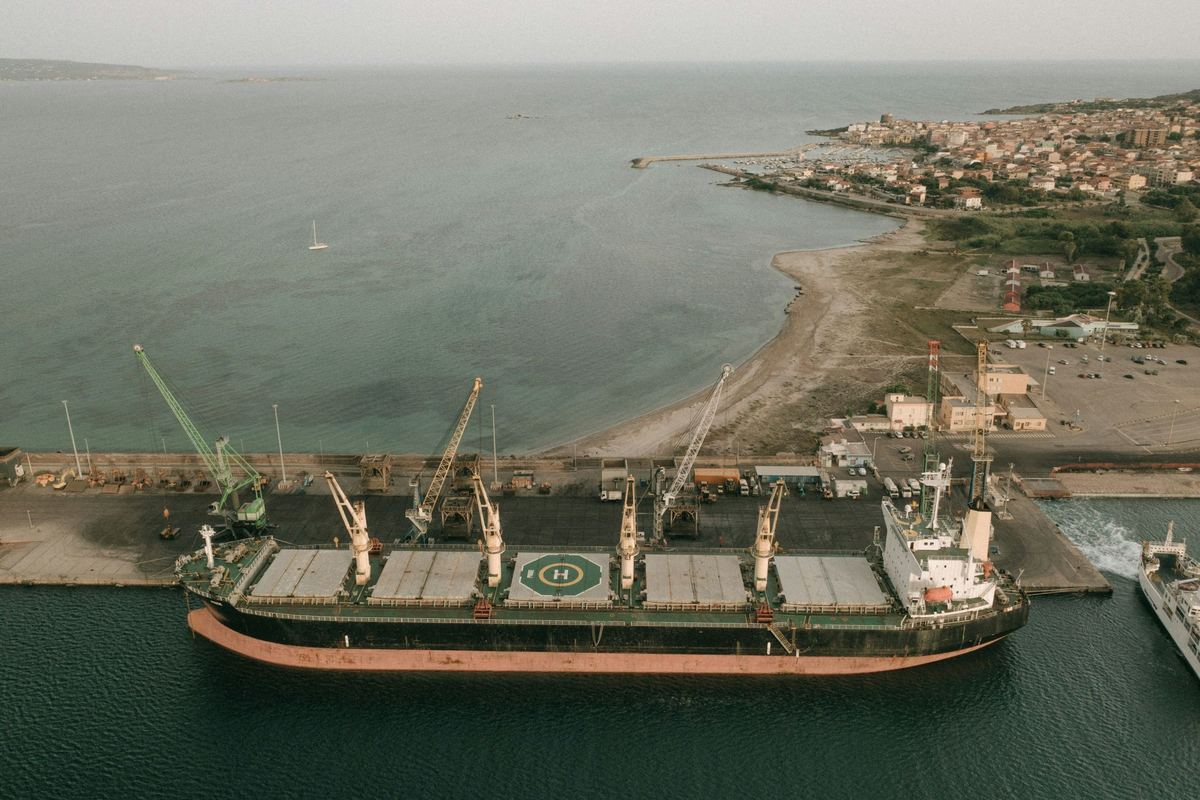
We offer vessel berthing coordination on the Gulf of İskenderun; NarinPort manages pilotage, towage and mooring through one point of contact.
Summary
NarinPort is an independent port services operator coordinating the entire vessel-berthing process on behalf of cargo owners on the Gulf of İskenderun. From ETA notification and berth allocation to pilotage, tug organisation and mooring coordination, it manages every stage through one point. Its structure unconnected to a specific quay enables coordination at all terminals on the gulf.
Vessel berthing is a multi-party operation covering a vessel's entry from open water into port limits and its safe mooring alongside the quay. Pilotage, towage and mooring must take place at the right time, in the right order and in coordination. The harbour authority, pilotage organisation, tug company, mooring team and VTS (Vessel Traffic Services) work together in this process.
NarinPort is an independent port services operator undertaking this coordination for the cargo owner on the Gulf of İskenderun. Without being tied to a particular quay, it coordinates berthing at the gulf's terminals and relieves the customer of operational complexity.
How Does Vessel Berthing Work in İskenderun?
Berthing starts long before the vessel approaches the port and comprises five connected stages.
- The first step is ETA notification and berth allocation. While the vessel is still at sea, its particulars, draft and cargo status are submitted to the harbour authority at least 24 hours before arrival. The authority issues the berthing permit and allocates a suitable berth. For vessels carrying dangerous cargo, notification may extend to 72 hours. Missing information or timing errors delay allocation and extend anchorage waiting time.
- At the pilot boarding point, a pilot boards from a pilot boat. The pilot exchanges information with the master on the bridge, reviewing manoeuvring characteristics, wind and current conditions and the berthing plan. With local-water knowledge, the pilot guides the vessel towards the berth. Pilotage is mandatory at Turkish ports and is provided 24/7 in İskenderun.
- As the vessel approaches, its own propeller and rudder become insufficient at low speed, so tugs assist. Depending on vessel size and conditions, one or more tugs connect at the bow and stern to push, pull and brake. The approach angle is generally kept at 10–15 degrees before bringing the vessel parallel to the quay.
- Once close enough, mooring begins. The deck crew throws a heaving line; the shore team receives it and secures the main mooring line to a quay bollard. Once all lines are secured and tensions adjusted, the vessel is declared all fast. Fenders are checked and the gangway lowered.
- Customs, health and security checks are completed and the vessel receives free pratique. Only then can contact with the quay and loading or discharging preparations begin.
What Are Berthing Conditions Like on the Gulf of İskenderun?
The Gulf of İskenderun is a semi-enclosed basin in the northeastern Mediterranean between the Taurus and Amanos Mountains. Sudden, strong northerly Yarıkkaya winds create serious manoeuvring difficulties, particularly for vessels with high wind resistance such as empty bulk carriers and container ships. When wind exceeds thresholds, the harbour authority may suspend berthing and departure operations.
Multiple terminals and port facilities increase traffic density. VTS monitors vessels around the clock using radar, AIS and radio, but berth occupancy and vessel traffic directly affect berthing programmes during busy periods. A coordinator familiar with these conditions and able to adapt to changing variables reduces delay and cost risks.
What Does NarinPort Do During Berthing?
An importer or exporter managing berthing alone must deal separately with harbour-authority permits, pilotage scheduling, suitable tug capacity, the mooring team and customs and health checks. Each body uses different procedures and requires familiarity with maritime terminology. Unexpected berth occupancy, weather changes or equipment mismatches demand immediate replanning.
NarinPort undertakes all this coordination on the customer's behalf, acting as one point of contact from ETA monitoring and permits through tug organisation and mooring timing. A ship agent represents the vessel and owner; NarinPort represents the cargo and its owner's operational interests. This distinction highlights the value of a coordinator acting for the customer in berth allocation, timing priorities and unexpected delays.
Our independent structure allows us to consider every berth option on the Gulf of İskenderun and develop the most suitable plan. After mooring, stevedoring, haulage and weighing continue within the same coordination chain.
Contact Us About Your Berthing Operation
If you plan to bring cargo to or ship cargo from the Gulf of İskenderun, let us plan all your port operations together, including berthing. Share your vessel's size, cargo type and estimated arrival so we can prepare a coordination plan tailored to your operation.