

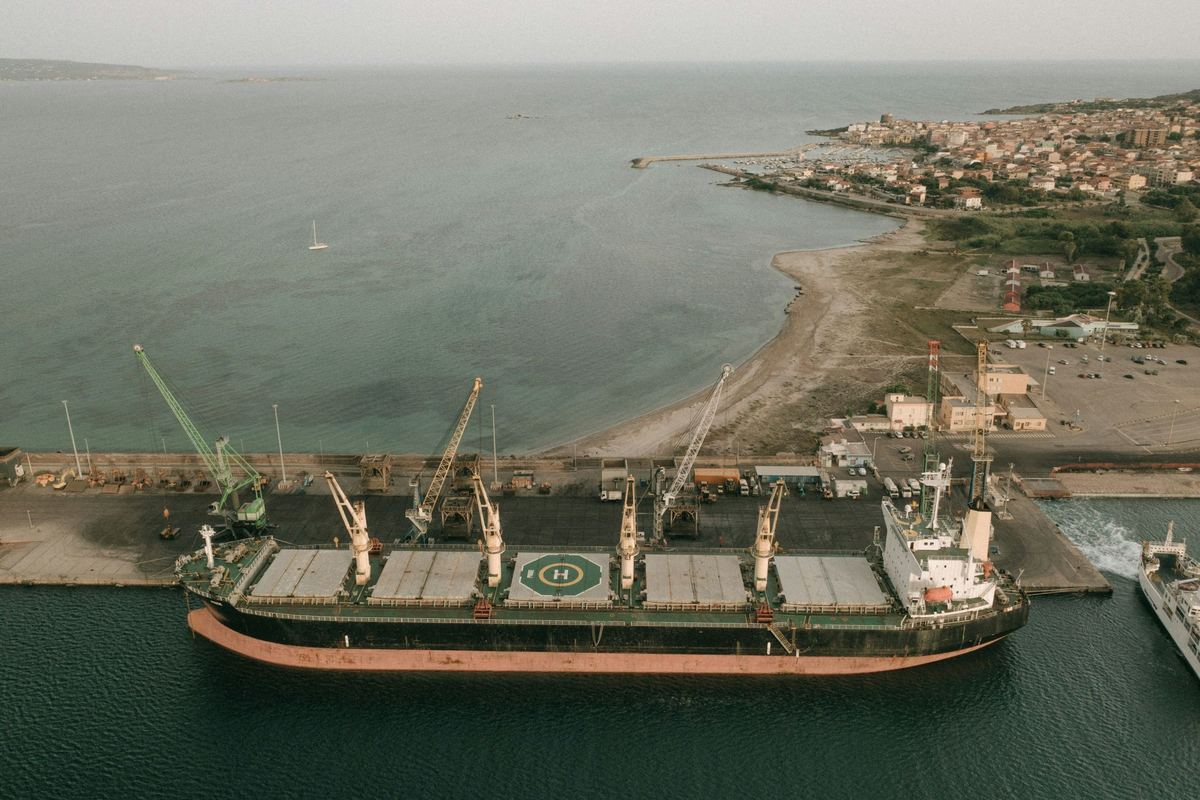
We coordinate vessel discharging and loading on the Gulf of İskenderun. From bulk cargo to iron and steel, your stevedoring process proceeds through one point of contact.
Summary
NarinPort is an independent port services operator coordinating the entire vessel discharging and loading process on behalf of cargo owners on the Gulf of İskenderun. It manages every stage through one point, from cargo-plan analysis and equipment selection to discharge/loading cycles, tally and Statement of Facts records. Its structure unconnected to a particular quay enables coordination at all terminals on the gulf.
Vessel discharging and loading, known internationally as stevedoring, covers lowering cargo from a vessel's holds or deck to the quay and loading it from quay to vessel. Here discharge means cargo unloading, rather than rescue or salvage. On the Gulf of İskenderun, this is the most critical link in cost and timing immediately after vessel berthing.
The decisive factor is the coordination connecting the crane, stevedore team, vehicles and customs procedures. NarinPort is an independent port services provider operating this coordination for cargo owners. Terminal cranes, equipment and stevedores belong to the quay operator. Our role is to organise these resources according to cargo type, tonnage and timing, and follow the process end to end. Responsibility for stevedoring costs depends on charter-party terms such as FIO, FILO and Liner Terms. Cargo owners unfamiliar with this structure may face unexpected invoices after completion.
How Do Vessel Discharging and Loading Operations Work in İskenderun?
Operations begin well before berthing. Preplanning reviews cargo information, analyses the stowage plan and assesses hold capacity and load distribution. Lifting equipment and attachments are selected for the cargo type. Truck coordination is established at the same stage. The removal speed, warehouse destination or direct vehicle loading under supalan must be decided before arrival. Poor planning slows operations before they start: accumulated quay cargo blocks crane space, cranes stop and the vessel waits.
After the vessel is secured, holds are opened and physically inspected. Cargo condition, stowage and damage signs are recorded. This initial inspection forms the basis of the final damage report and determination of commercial liability. Without a sound starting record, proving subsequent responsibility is almost impossible.
During discharge, cranes lift cargo from the hold to the quay or a waiting vehicle. A tally clerk records every lift, separately noting item count, weight and physical condition. Tally records document consistency between the customs declaration and actual cargo and support insurance recourse. Loading runs in reverse: quay cargo is placed in the hold according to the stowage plan and secured with dunnage.
At completion, a Statement of Facts records start and finish times, weather stoppages, equipment failures and waiting periods with timestamps. Demurrage calculations rely on this document. A draft survey verifies gross cargo weight, relevant to the customs base and VGM compliance. Every hour beyond laytime creates demurrage exposure; the Statement of Facts is the reference for that calculation.
Discharging and Loading by Cargo Type
İskenderun's hinterland is one of Türkiye's busiest steel-production regions, shaping the gulf's discharge profile. Equipment, handling technique and risk differ sharply between cargo groups.
Iron and steel, including rolled sheet, billets, coils and bars, require magnetic lifters, C-hooks or specialist slings. Incorrect attachments deform coils or scatter bars. The balance of the bottom layer determines the stability of the whole stack; one sliding coil can create a domino effect.
Bulk wheat, corn, coal, fertiliser and ore use grab buckets or conveyors. Moisture is critical: differences between hold moisture and open-quay conditions can damage grain quality in minutes. During loading, trimming is essential for vessel stability; uneven distribution creates serious risks at sea.
For big bags and sling bags, sling integrity is checked before every lift. A single torn sling can drop tonnes of cargo. Marble requires care against impact, with lifting speed and lowering angle precisely planned. For cotton bales, moisture and fire risk determine discharge speed and storage conditions. Extended quay waiting is unacceptable for these loads.
What Conditions Affect Discharge Operations?
Sudden, severe Yarıkkaya winds from the north are the gulf's most significant variable. When wind takes cranes beyond safety limits, discharge can stop. Empty bulk carriers and high-freeboard container ships are especially exposed, while swinging loads threaten equipment and cargo. The harbour authority assesses conditions continuously and suspends operations when required.
The gulf's multiple terminals affect berth occupancy, traffic and discharge scheduling. Without knowledge of alternatives, cargo owners whose vessels are rejected or waiting at a terminal can face unresolved delays. A coordinator familiar with the terminal network can address congestion through berth alternatives.
Steel mills' raw-material imports and finished-product exports account for a substantial share of gulf operations. Steel cargo requires different equipment, protocols and stowage calculations from ordinary general cargo. This concentration demands sector-specific expertise; applying general-cargo experience to steel increases damage risk.
What Does NarinPort Do in Stevedoring?
An importer managing operations alone must share the cargo plan with terminal stevedores, confirm crane and attachment suitability, synchronise trucks with discharge speed, organise tally services and run customs procedures in parallel. Each institution has different procedures. Communication can break at handovers, liability may remain unclear and unexpected costs emerge after completion.
NarinPort connects these separate elements into one operational chain. We act as a single point of contact from terminal and equipment selection to tally organisation and quay-to-warehouse timing. The ship agent works for the owner, while protecting the cargo owner's operational interests is a separate coordination role. NarinPort fulfils that role on the quay, in customs coordination and along the transport route. This position determines decisions about terminals, priorities and unexpected delays.
Our independent structure allows all berth options to be considered. Discharged cargo moves quickly to our off-dock facility, limiting port storage pressure. Cargo remaining on the quay stops cranes; stopped cranes keep the vessel alongside and increase demurrage exposure. Removal and discharge speeds must match to break this chain. Our off-dock facility exists to maintain that balance.
Stevedoring continues the berthing operation and is followed by port-to-warehouse haulage and weighbridge procedures. All these links operate within the same coordination chain, allowing intervention before one delay triggers another.
We establish clarity before operations. Discharge, haulage, weighing, storage, port storage, delivery-order and tally items are set out separately in the quotation. Our principle is that no unexplained item should arise between the quotation and final invoice.
Contact Us About Your Discharging/Loading Operation
If you are planning cargo movements through the Gulf of İskenderun, let us plan your operation together. Share cargo type and tonnage, vessel type and ETA for a tailored coordination plan. From steel and bulk cargo to single containers and high-tonnage consignments, every operation is planned and conducted with the same care.